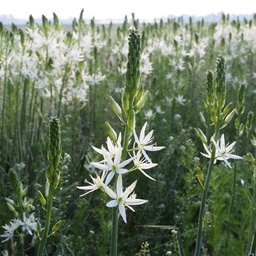
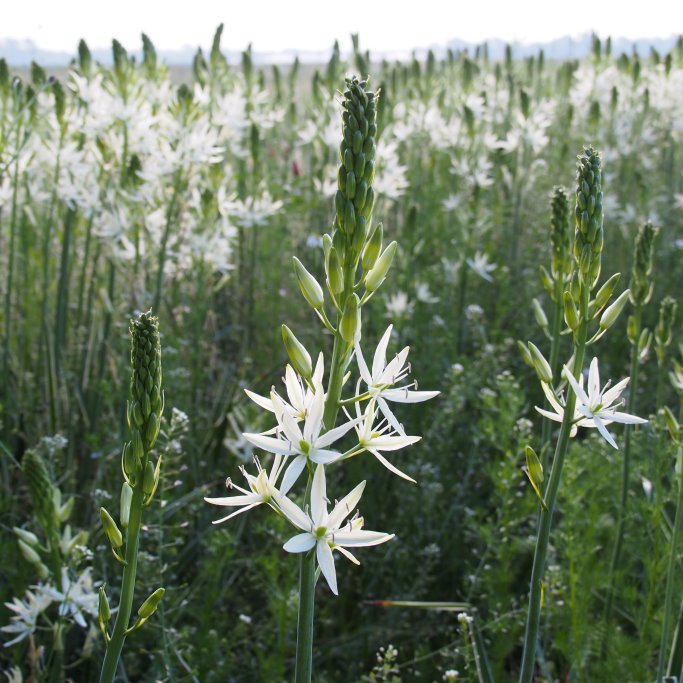
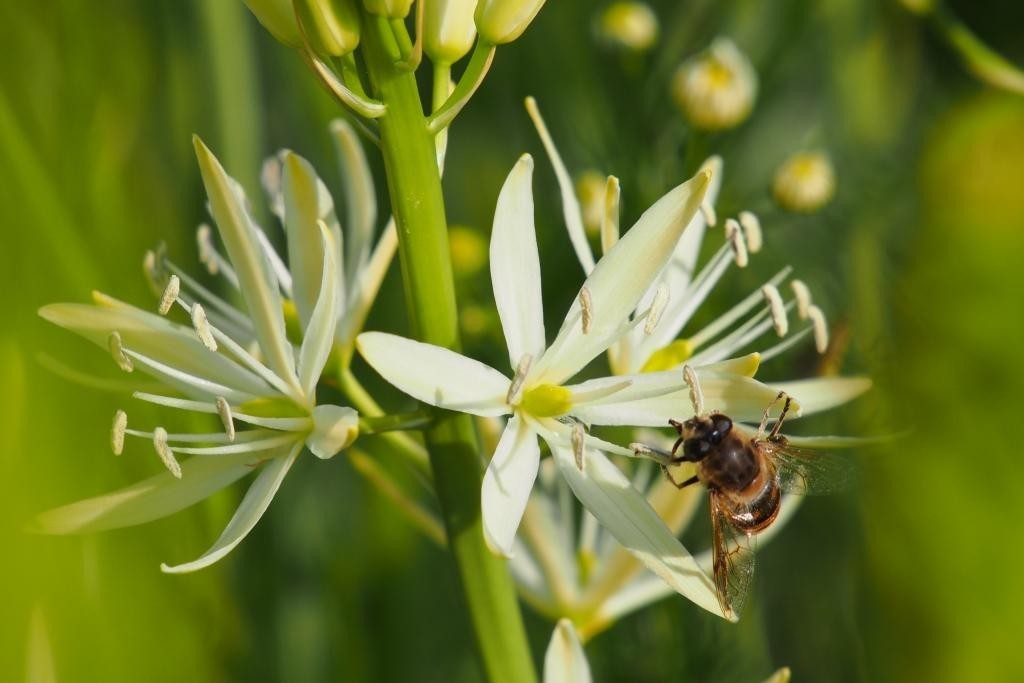
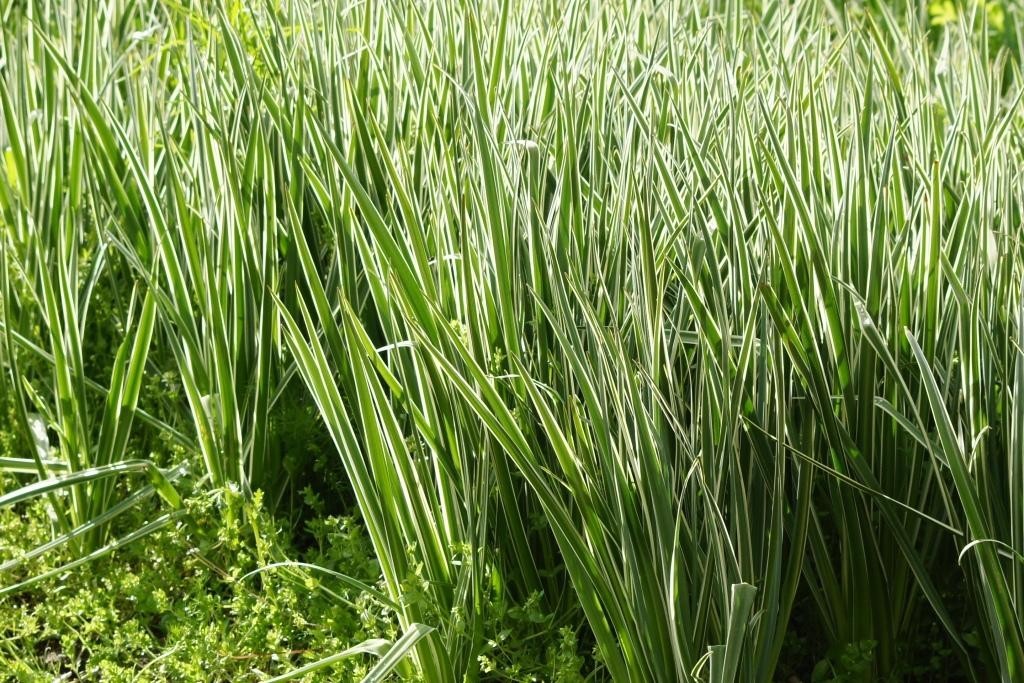
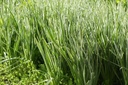
Camassia Sacajawea is vernoemd naar een opmerkelijke vrouw. Sacajawea was een Shoshone-indiaanse die in 1804 als gids en tolk diende bij de beroemde expeditie van Lewis en Clark door Noord-Amerika. Zonder haar had die expeditie een ander verloop gehad. De plant die haar naam draagt is even indrukwekkend: lange stelen van soms een meter hoog, bezet met roomwitte bloempjes, en een sierlijk lancetvormig blad met een fijne zilveren rand.
Een plant voor de late lente
De Camassia bloeit pas in mei en juni — later dan de meeste bollen — en neemt daarmee het stokje over als tulpen en narcissen al klaar zijn. Op dat moment is ze een van de weinige grote bolgewassen die nog in bloei staan, en dat maakt haar waardevol zowel in de tuin als voor bijen en hommels die dan dankbaar zijn voor elke nectarbron. De trossen room-witte bloempjes staan prachtig in de avondzon.
Standplaats en verzorging
De Camassia Sacajawea gedijt het beste op een vochtige, voedselrijke bodem — in zon of halfschaduw. Ze is van nature een prairieplant en houdt van ruimte. Plant de bollen in het najaar op circa 15 cm diepte en geef ze voldoende ruimte om uit te groeien. Langs een vijver, in een natte border of in een grote border met andere late bloeiers is ze op haar mooist. Biologisch geteeld, gecertificeerd NL-BIO-01.


![[AM99025-V2] Bijenbuffet Oeverpracht v2 - BIO](/web/image/product.template/7152/image_512/%5BAM99025-V2%5D%20Bijenbuffet%20Oeverpracht%20v2%20-%20BIO?unique=1cbe3cf)
![[A9016] Camassia Leichtlinii Caerulea - Blauwe Prairielelie - BIO](/web/image/product.template/10012/image_512/%5BA9016%5D%20Camassia%20Leichtlinii%20Caerulea%20-%20Blauwe%20Prairielelie%20-%20BIO?unique=3400ed4)